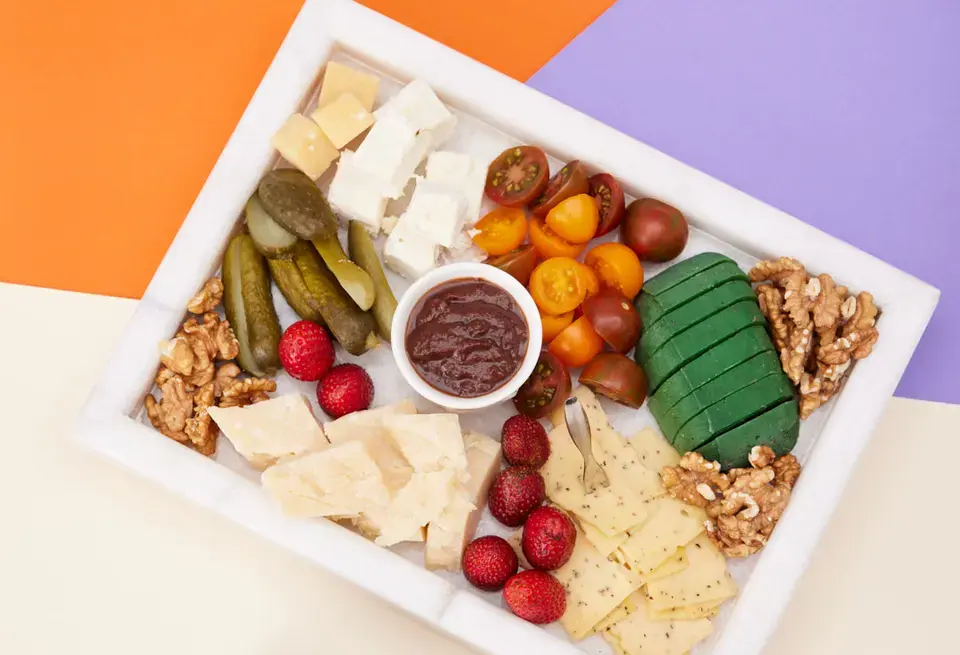
A fruit spread can bring a new dimension to a cheese-and-wine pairing. Sweetness, acidity, and aroma all matter, but a small amount is usually enough. Begin with the cheese, choose a spread that gives it an interesting contrast, and taste the wine with the complete bite.
Think in flavor profiles
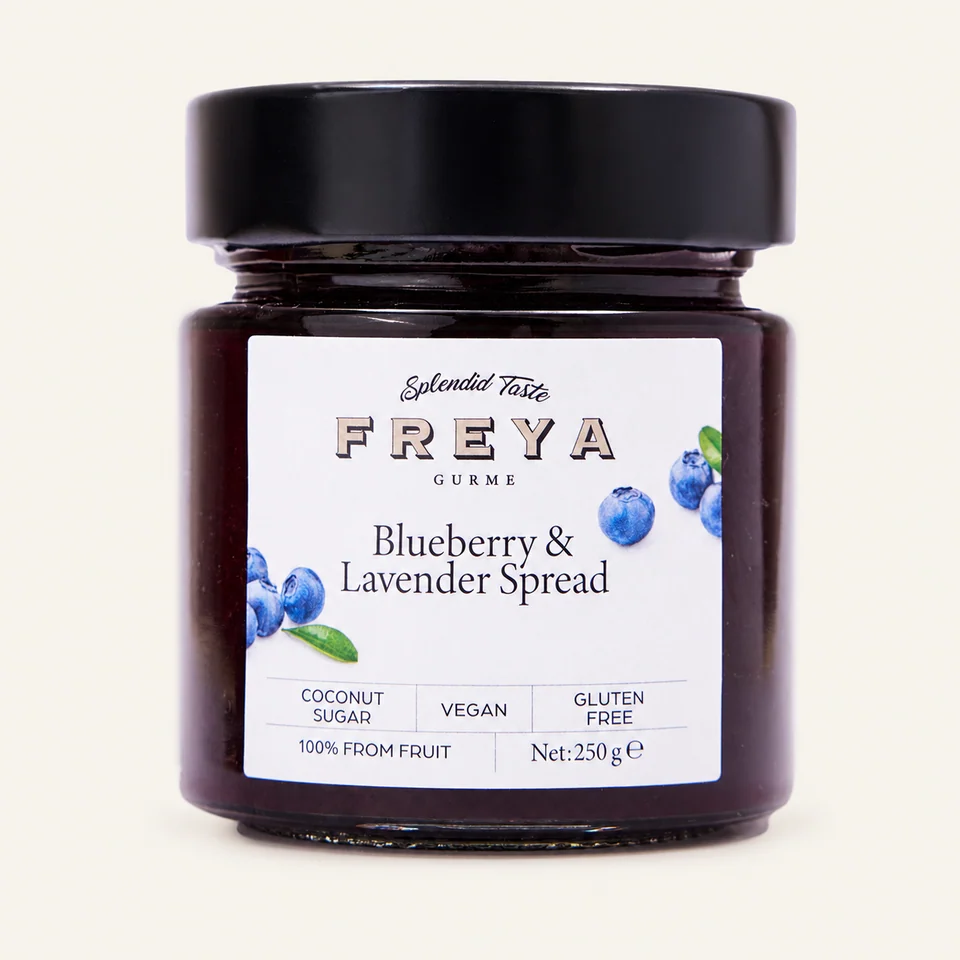
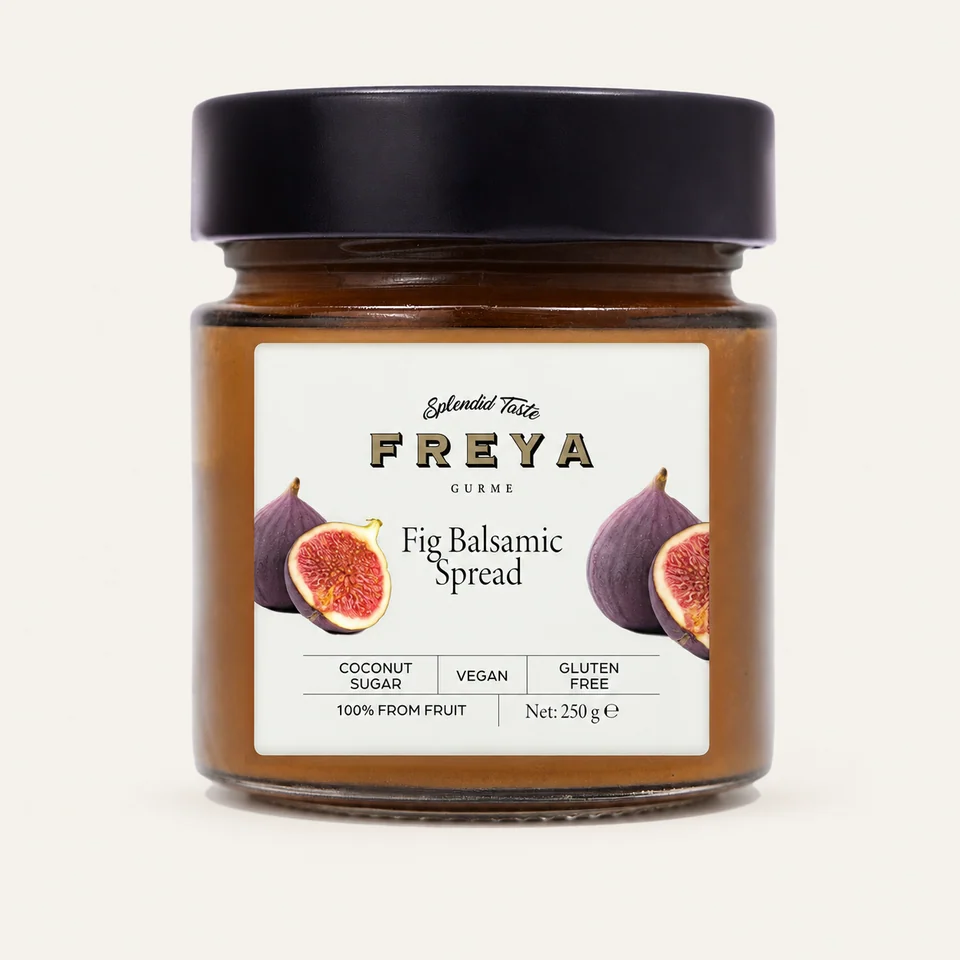
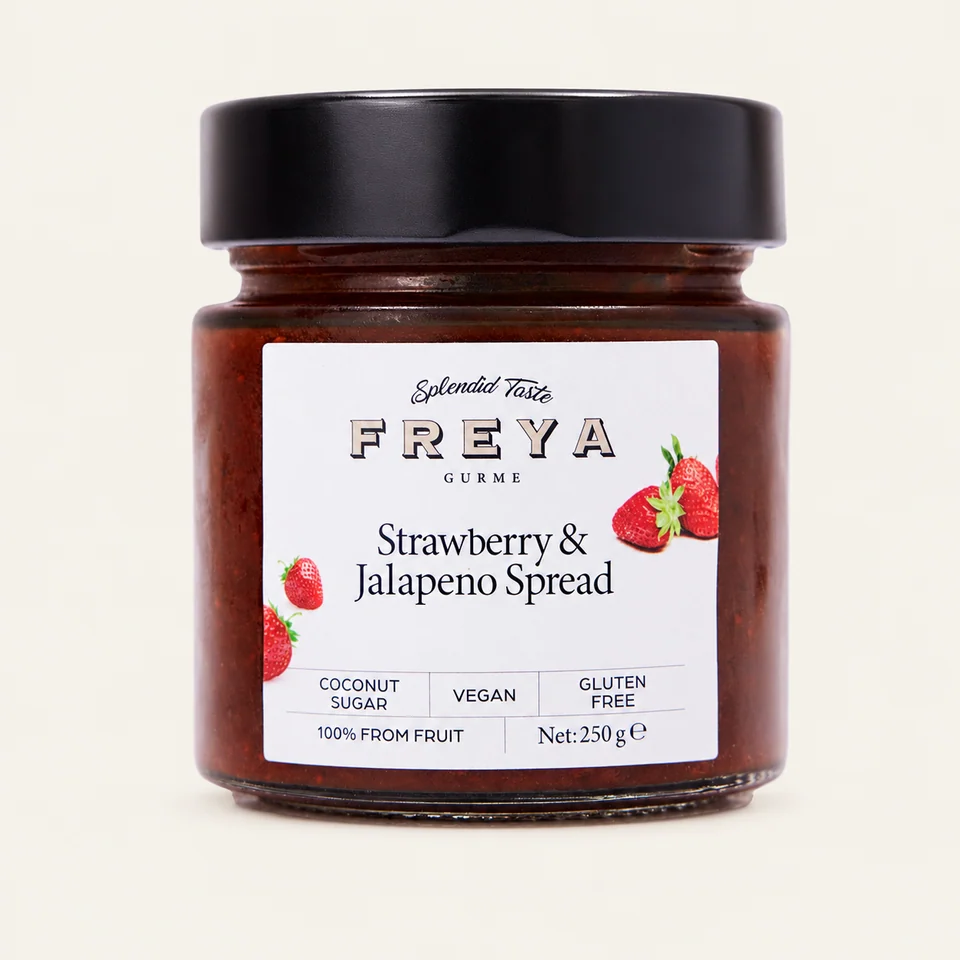
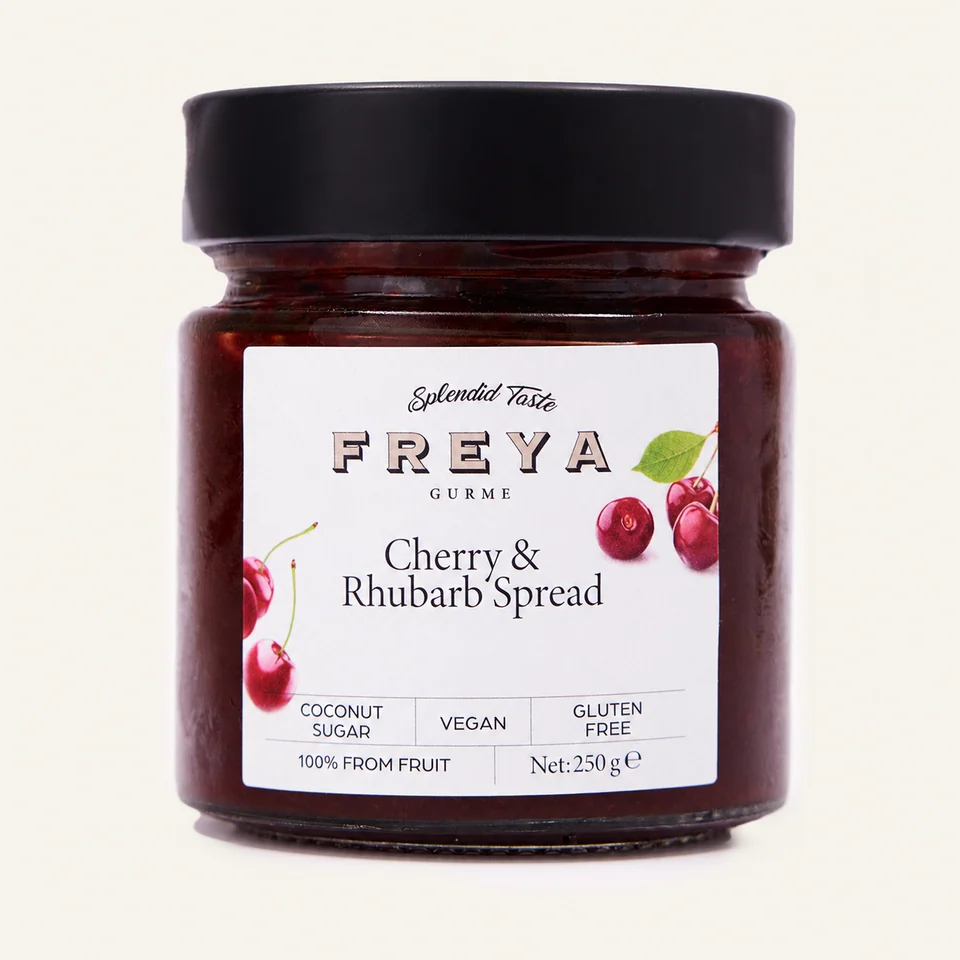
Fig balsamic is rich and sweet-tart. Blueberry lavender combines fruit with a floral note. Cherry and rhubarb emphasize tartness, while strawberry jalapeño brings pepper heat. These are useful directions to explore rather than rigid pairing rules.
Aged hard cheeses
Aged Gouda, aged kaşar, and other firm cheeses have enough flavor to stand alongside a richer fruit spread. Try a small amount of fig balsamic on a plain cracker with the cheese. Keep the amount modest so the cheese's nutty or savory notes remain clear.
Brie and Camembert
Soft, creamy cheeses welcome a fruit contrast. Blueberry Lavender Spread adds a fragrant note; Strawberry Jalapeño Spread introduces a different, spicier direction. Serve the spread beside the cheese so guests can taste both the plain cheese and the pairing.
For baked Brie, add the fruit component in a way that suits the recipe and watch any topping exposed to oven heat. A separate bowl of spread is an easy option and allows everyone to control the amount.
Blue cheeses
Roquefort and Gorgonzola have assertive flavors. Fruit sweetness can provide contrast, but you may need less spread than expected. Taste the cheese and spread together before adding nuts, cured meats, or other strong ingredients.
Fresh goat cheese and mild cheeses
A fresh cheese leaves more room for a spread's aroma. Try blueberry lavender in a small quantity on a toast with goat cheese, or use a tart cherry-rhubarb accompaniment beside a mild fresh cheese. Plain bread helps keep the tasting focused.
Bring the wine into the pairing
A crisp white, a rosé, a red, and a sparkling wine will interact differently with the same bite. Sweetness and pepper heat can change the impression of the wine, so use suggestions as a starting point and adjust according to taste.
Serve for easy comparison
Use small bowls for the spreads, separate utensils, and a little space between cheeses. Put plain bread and water within reach. A board with fewer, clearer choices is often more interesting to taste than one crowded with competing flavors.
Follow the package instructions for both cheese and spreads, and replenish small portions as needed. The purpose of the board is exploration: the best pairing is the one you and your guests enjoy.